"The day we had electricity, and we could put a mattress in, we got back," said Orna Weinberg, forced to flee after her home was struck by a Hezbollah rocket in October 2023.
Orna Weinberg was forced to leave her home in northern Israel after it was struck by a Hezbollah rocket in October 2023, and spent the next two years displaced from her tight-knit community that is located just a few meters from the border with Lebanon.
Weinberg, 59, describes those years as "pretty tough" and marked by loss that went beyond the damage to her home. Many elderly residents died during the two years they were displaced, including her mother-in-law and her uncle.
"The day we had electricity, and we could put a mattress in, we got back, and we started fixing the house from inside out," she said.
Now, with northern Israel again facing rocket fire as Israeli troops battle Hezbollah in a spillover of the Iran war, Weinberg says she and other residents of the tiny kibbutz are staying put, having only returned in October of last year.
"We will never, ever leave this place again," Weinberg said.
Manara, a small kibbutz, was established in 1943, five years before the State of Israel was founded.
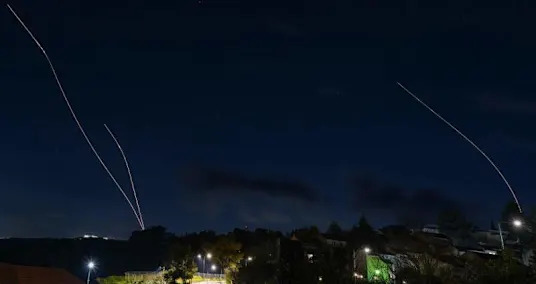
Lebanese villages are clearly visible from Manara's edge, underscoring its vulnerability to Hezbollah rocket fire. Israeli artillery fire into Lebanon frequently echoes in the distance.
Manara residents have 'a few seconds' to reach shelter
Residents of Manara and other northern Israeli communities, home to hundreds of thousands of people, often have only a few seconds to reach bomb shelters when a rocket is launched from Lebanon, compared with several minutes in Tel Aviv or Jerusalem. Sometimes the warning comes only after a rocket has struck.
The repair work on Weinberg's home has been halted for now. It is not safe to continue. Nearby houses in the kibbutz are awaiting demolition, having been damaged by Hezbollah rockets during more than a year of fighting that erupted in parallel to the Gaza war. The Israel-Hezbollah fighting subsided following a 2024 ceasefire.
In another kibbutz, Hagoshrim, which sits about two kilometers from the Lebanese border, residents have also vowed to stay on despite the fear of deadly rocket fire. A neighbor was killed by Hezbollah rocket fire in 2024.
Hagoshrim resident Dror Gavish describes the threat from the Lebanese militant group as frightening. Two people in Israel have been killed in Hezbollah attacks since the group began firing rockets in support of Iran on March 2 this year.
Still, Gavish, 42, said he, his wife, and three children preferred to stay rather than evacuate. "We are here, and we're not going to go anywhere."
As fighting rages, Prime Minister Benjamin Netanyahu's government has insisted that no residents of the North will be forced to evacuate.
After Hamas's October 7, 2023, terror attack on southern Israel, Manara's residents fled, fearing Hezbollah could stage a similar assault. Tens of thousands of residents of Israel's north received government assistance to stay in temporary accommodation across the country, and many have yet to return.
This time around, Netanyahu's government has not offered to pay for residents to stay in hotels elsewhere in the country until the war dies down. Instead, officials have vowed to seize territory inside Lebanon to ensure Hezbollah cannot threaten northern Israeli communities with short-range fire.
Weinberg, the Manara resident, is critical of Netanyahu's government. Like many Israelis, she says there must be an investigation into the failures that led to the October 7 attack, which killed close to 1,200 people, including two of Weinberg's relatives. Another was abducted to Gaza and later killed, she said.
Netanyahu has rejected any personal responsibility for the failures and so far resisted an independent inquiry, instead backing an inquest in which the government would appoint half of its members.
"I don't think the government are our saviors, and I don’t expect them to be," Weinberg said. Israel's government should pursue peace with its neighbors rather than wage war, she said.
Gavish, of Hagoshrim, said that although he, like many Israelis, sees Iran as a serious threat, he does not trust Netanyahu's government to act in the country's best interests.
He hopes elections later this year will bring a new government focused on diplomacy, including peace with Lebanon.
"I really believe things here can be much better for us," he said.
LATEST POSTS
- 1
 Surge of off‑lease electric vehicles expected to drive down used EV prices
 - 2Peloton recalls more than 800,000 bikes after broken seat posts injure users
- 3US bishops officially ban gender-affirming care at Catholic hospitals
- 4AI’s errors may be impossible to eliminate – what that means for its use in health care
- 5The Century Coupe Could Be Toyota’s Most Ambitious Car Since the LFA




- Moon milestones: A rundown of Artemis 2's many spaceflight firsts
- From Loner to Force to be reckoned with: Individual Accounts of Change
- The Best Web-based Courses for Ability Advancement
- Lucrative Positions in the Advancing Position Market of 2024
- 10 Moving Design Frill for Summer 2023
- Find the Abilities Required for Advanced Advertising Position
- Experiences in Natural life Protection: Individual Progressives' Excursions
- How did birds survive while dinosaurs went extinct?
- Manual for 6 well known Amusement Park